
Quick SummarySiding cost in Chicago depends heavily on material choice, home size, and the condition underneath the old siding once it comes off. Vinyl remains the most budget-friendly option, James Hardie fiber cement offers a premium, long-lasting alternative at roughly double the price, and wood or stone sit at the top of the range. Full replacement, rather than repeated patching, tends to deliver a more consistent and cost-effective result over time. Getting itemized, comparable quotes and considering related exterior needs like gutters or decking at the same time helps homeowners plan a project that fits their budget without unexpected costs later. |
Ask five neighbors what they paid for new siding and you will likely get five different answers, none of which help you plan your own budget. That is the frustrating part of researching siding cost in Chicago: prices swing so widely by material, home size, and contractor that generic online estimates rarely match reality. This breakdown walks through what actually drives siding pricing in 2026, so you can budget with confidence instead of guessing.
Whether your current siding is faded, storm damaged, or simply outdated, understanding how much does siding cost before you start calling contractors puts you in a much stronger position to compare quotes and plan the project properly.
What Drives Siding Installation Cost in Chicago
Siding installation cost in Chicago depends on a handful of core variables, and once you understand them, quotes stop feeling like a mystery.
Material Choice
This is the single biggest factor. Vinyl siding remains the most budget-friendly option, while James Hardie fiber cement siding sits meaningfully higher, running close to double the cost of vinyl per square foot. Natural wood or stone veneer sit at the top of the range. Each material carries different labor requirements too, which affects the total beyond just the material price tag.
Home Size and Complexity
A simple rectangular ranch home costs less to side than a home with multiple gables, dormers, and architectural detail. More corners and angles mean more cutting, more trim work, and more labor hours.
Full Tear-Off
A proper siding project involves removing the old siding entirely before the new material goes on. This lets the crew inspect and address anything hiding underneath, from old house wrap to soft sheathing, rather than covering existing problems with a fresh layer.
Insulation Upgrades
Many homeowners choose to add rigid foam insulation beneath new siding, which improves energy efficiency but adds to the project cost.
Condition Underneath the Old Siding
Rotted sheathing, water damage, or pest issues discovered once old siding comes off need to be addressed before new siding goes on. This is one of the more common reasons a final bill differs from the initial estimate, and it is also exactly why full replacement crews, rather than a quick patch job, matter for getting this right.
2026 Price Ranges by Material
While every home is different, here is a general sense of where siding installation cost in Chicago tends to land for 2026, based on material type:
- Vinyl siding: Typically the most affordable option per square foot, with a wide range of colors and profiles now available that avoid the dated “plastic” look older vinyl was known for.
- James Hardie fiber cement siding: A premium option running roughly double the cost of vinyl, chosen for its durability against Chicago’s freeze-thaw cycles and strong resistance to fire and moisture. We are a James Hardie preferred contractor, which reflects specific manufacturer training on installation.
- Wood siding: Higher upfront cost and ongoing maintenance, but a rich, natural appearance that some homeowners specifically want for historic or craftsman-style homes.
- Stone veneer: Often used as an accent rather than full coverage, due to material and labor intensity, and typically the highest cost tier.
Rather than anchoring to a single number pulled from a national average, it is worth getting a property-specific quote, since square footage, trim details, and material choice combine differently for every home.
Why Full Replacement Matters More Than It Seems
It can be tempting to patch a few damaged panels here and there and put off a full project, especially when the budget is tight. But siding ages as a system, not panel by panel.
Color and profile from ten or fifteen years ago rarely match new material exactly, house wrap and insulation underneath age right along with the visible siding, and repeated patch jobs tend to cost more in aggregate over several years than a single, properly executed full replacement.
That is why our crews are built around complete residential siding projects from start to finish rather than piecemeal patch work, which also means the finished result performs and looks consistent across the entire home.
Color, Profile, and Curb Appeal Considerations
Cost is not the only thing that shifts between siding choices. Profile and color availability vary by material and by brand. Vinyl and James Hardie both now offer a wide range of factory-applied colors and board widths, letting homeowners match historic look with modern performance.
Board-and-batten and shake-style profiles typically cost more than standard lap siding due to the additional trim and cutting involved, regardless of which material you choose.
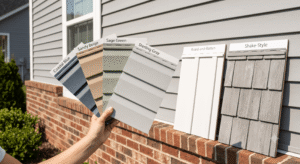
If curb appeal and long-term color retention matter as much as budget, it is worth looking at physical samples in daylight rather than relying on a screen, since siding colors can shift noticeably depending on lighting and surrounding brick or stone.
Common Pricing Mistakes Homeowners Make
A few patterns show up again and again when homeowners get burned on a siding project:
- Comparing a per-square-foot number without confirming what it includes. Some quotes bundle tear-off, house wrap, and trim work into the number, while others price those as separate add-ons later.
- Assuming the lowest bid reflects the same scope of work. A dramatically lower quote often means thinner material, no house wrap upgrade, or a shorter labor warranty, not simply a better deal.
- Skipping a written timeline. Verbal promises about scheduling are far less reliable than a signed timeline with milestones.
- Not asking who actually performs the work. Some companies sell the job and then subcontract the installation to a rotating crew, which makes accountability difficult if something goes wrong.
Avoiding these mistakes usually costs nothing beyond a few extra questions during the estimate process, and it saves considerable frustration later.
Getting an Accurate Quote
To get quotes you can actually compare apples to apples, make sure each contractor is pricing the same scope of work. Ask for line items covering:
- Material brand and specific product line
- Full tear-off and disposal of old siding
- Whether house wrap or additional moisture barrier is part of the job
- Labor warranty length, separate from the manufacturer’s material warranty
- Timeline and crew size for the project
A quote that skips these details is harder to trust, even if the bottom-line number looks appealing. We walk every homeowner through this breakdown during our residential siding installation consultations so there are no surprises once work begins.
Financing and Timing Considerations
Siding projects are often planned around spring and fall, when weather is more predictable for installation crews. Scheduling early in the season, before crews get fully booked heading into summer, can sometimes result in better scheduling flexibility.
If your project stems from hail or wind damage, your homeowner’s insurance may cover some or all of the full siding replacement cost, which is worth discussing with your adjuster before committing to out-of-pocket financing. We never guarantee a specific claim outcome, but we can help explain what the process typically looks like.
Do not Forget the Rest of the Exterior
While budgeting for siding, it is worth considering related exterior needs at the same time. Aging siding often coincides with aging gutters, and combining projects can reduce overall labor costs since crews are already on-site.
If your gutter replacement is original to the home and showing signs of sagging, tackling both at once is often more cost-effective than spacing the projects years apart. The same logic applies to a deck nearing the end of its life, which is worth a look while the crew is already handling the exterior.
Planning Around Chicago’s Seasons
Siding installation and replacement in Chicago is weather-dependent work, and the best results generally come from scheduling during spring or fall, when temperatures allow adhesives, caulking, and trim materials to cure properly. Winter installations are possible but require extra care, and summer scheduling can get tight as demand peaks alongside storm season.
Booking early, ideally a season ahead of when you actually want the work done, tends to open up better contractor availability and a more comfortable installation timeline rather than a rushed one squeezed in before weather turns.
Why Homeowners Choose Skyline Exteriors and Construction
Skyline Exteriors and Construction, PLLC has completed thousands of roofing and siding projects across the Chicago area since 2018, and we understand how confusing cost comparisons can feel for homeowners. Our team is BBB accredited, holds an active Illinois contractor license, and carries a 4.9-star reputation across close to 250 Google reviews.
We are a James Hardie preferred contractor and walk every client through transparent, itemized quotes before any work begins. We have helped homeowners in communities including Barrington and Buffalo Grove navigate exactly these decisions, comparing materials and budgets until they landed on the right fit for their home.
Request your free, no-pressure estimate today and get real numbers instead of guesswork.
Frequently Asked Questions