
Maintaining your home’s health and value involves many considerations, but one often-overlooked aspect is the gutter system—a key component that protects your property. Gutters play a core role in keeping water away from your roof, walls, and foundation. A properly installed gutter system protects your home from potential water damage. This can lead to costly repairs down the line. In this post, we will walk you through everything you need to know about gutter installation, from the basics of gutters to the step-by-step process of installation and maintenance.
What Are Gutters and Their Role in Home Protection?
Gutters are important for preventing water from damaging your home. When it rains, water falls off the roof, and without gutters, that water would drip down the sides of your house, potentially causing severe damage. Water can erode the soil around your foundation, leading to cracks and structural issues.
In addition, if water pools around the foundation, it can seep into your basement or crawl space, causing mold, mildew, or water damage to the interior of your home. Gutters also protect your landscaping. They prevent rainwater from washing away flowers, shrubs, and grass.
In essence, gutters protect your home’s foundation, landscaping, and siding from costly water damage. They also keep your basement dry and free of moisture-related problems.
Types of Gutters
There are several types of gutters available, and choosing the right one for your home depends on your roof style, climate, and aesthetic preferences.
K-Style Gutters
K-style gutters are one of the most common types found in residential homes due to their stylish design and practical functionality. These gutters feature a flat bottom with a decorative edge that resembles crown molding. They add an elegant touch to your home’s exterior.
Their shape is designed to efficiently handle large amounts of water. For that reason, they are particularly suitable for regions with heavy rainfall or intense storms. K-style gutters are available in both seamless and seamed variations. This gives homeowners flexibility depending on their needs. Thanks to their popularity, they are easy to find and relatively simple to install, making them a convenient option for many.
Half-Round Gutters
Half-round gutters are a classic choice, often seen on older homes or properties with a traditional aesthetic. The design of these gutters is semi-circular. This allows water to flow smoothly and efficiently through the system. Because of their rounded shape, they are often less likely to collect debris compared to other types, though they may require more frequent cleaning due to their open design.
While half-round gutters perform well in many climates, their aesthetic is more suitable for homes with a vintage or historical look. Homeowners should be aware that the cleaning requirements can be a bit more demanding than other gutter styles, especially if trees surround the house.
Box Gutters
Box gutters are commonly found on commercial roofing projects or homes with more complex rooflines. These gutters have a distinct, box-like shape and are often integrated directly into the roof structure. As a result, they are often larger than traditional gutters and are designed to handle larger volumes of water. They can be particularly useful for buildings with flat or low-pitched roofs.
Meanwhile, box gutters are not without their challenges. Due to their design, they can be prone to blockages from debris and require more frequent maintenance to prevent leaks and clogs. While they are highly effective in terms of water management, regular care is necessary to keep them functioning properly.
Seamless vs. Sectioned Gutters
Seamless gutters are made from one continuous piece of material, eliminating the need for seams that could potentially leak over time. On the other hand, sectioned gutters are assembled from multiple pieces and require joints to connect them. Although sectioned gutters may be more affordable, they may be more prone to leaks at the seams. Seamless gutters are generally more durable and require less maintenance.
Gutter Materials: Pros and Cons
When choosing the material for your gutters, it’s important to select one that can withstand your local climate and fit your budget. There are several materials to choose from, each with its own set of benefits and drawbacks.
- Aluminum Gutters
Aluminum gutters are a top choice for many homeowners due to their excellent combination of affordability, durability, and easy maintenance. One of the main advantages of aluminum is its lightweight nature. They make both handling and installation much easier compared to heavier materials. This can be particularly beneficial for DIYers or homeowners looking for a more cost-effective installation option.
Another major benefit is that aluminum is naturally rust-resistant. Therefore, it is ideal for areas with high humidity or frequent rainfall. With aluminum gutters, you don’t have to worry about rust or corrosion over time. It can be a concern with other materials like steel.
Furthermore, aluminum gutters are highly customizable. They come in a wide range of colors, shapes, and sizes. Be it a traditional K-style gutter or a more modern seamless option, aluminum gutters can be matched to your home’s exterior, providing a polished and cohesive look. Their versatility allows you to choose the perfect style and color that complements your home’s architecture.
We specialize in providing high-quality aluminum gutters that are designed to withstand the test of time. Our expert team makes sure that the installation process is efficient and seamless. We also offer custom solutions for unique roofing needs, so you can get gutters that are tailored to your specific home.
- Copper Gutters
Copper gutters are a premium choice that offers both exceptional durability and a beautiful, timeless look. Over the years, copper develops a unique patina. It gives your home an elegant, aged appearance. Copper is naturally resistant to corrosion and can withstand the elements for decades with minimal maintenance.
These gutters can be especially appealing for homeowners looking for a high-end aesthetic or those living in coastal areas where saltwater can cause damage to other materials.
However, copper gutters come at a much higher cost than other options, which can make them impractical for many homeowners on a budget. Additionally, they are more difficult to install compared to aluminum. They require specialized expertise and tools, which can drive up installation costs.
- Vinyl Gutters
Vinyl gutters are a popular choice for those on a tight budget or those who prefer a lightweight, easy-to-install option. Vinyl is resistant to corrosion and can handle a variety of weather conditions without deteriorating quickly. They are particularly ideal for areas with mild to moderate climates, as they won’t rust or corrode like metal gutters.
However, vinyl gutters do have their limitations. While they are cheap and easy to install, they are not as durable as aluminum or steel. In extreme temperatures, such as very cold winters or scorching summers, vinyl can become brittle and crack.
Besides, vinyl gutters are not as effective at withstanding heavy debris or harsh weather conditions. This means they may need to be replaced sooner than metal alternatives.
- Steel Gutters
Steel gutters are highly durable and offer superior strength, making them a good choice for areas that experience heavy rainfall, wind, or storms. They are much less likely to dent or become damaged from falling debris compared to aluminum. Steel gutters are typically coated with a protective finish, such as galvanization, to prevent rust. This makes them a great option for areas where metal gutters are exposed to moisture or salty air, like coastal regions.
Nevertheless, steel gutters have their drawbacks. Despite the protective coatings, they are still prone to rust over time if not properly maintained. Regular inspection and maintenance are required to keep them in good shape. Steel gutters tend to be heavier than aluminum. As a result, it can make installation more challenging and costly.
Preparing for Gutter Installation
Once you’ve chosen the right gutters for your home, it’s time to prepare for installation. Whether you’re doing the job yourself or hiring a professional, there are several steps to take before beginning.
Tools and Equipment Needed for Gutter Installation
To install gutters, you’ll need a few key tools:
- A measuring tape to measure the length of your roofline and determine the size of your gutters
- A ladder to reach the roof safely
- A chalk line to mark straight lines for the gutter placement
- A level to make sure your gutters are aligned properly
- A drill to attach the gutters to your roof
In addition to these tools, you’ll also need the gutters, downspouts, and gutter hangers.
Measuring Your Roofline and Determining Gutter Size
The first step in the installation process is to measure your roofline. Start by measuring the length of each section of your roof where you’ll be installing gutters. If your roof has a steep pitch, you’ll need to adjust your gutter size accordingly. In areas with heavy rainfall, you may need wider gutters to handle the increased water flow.
It’s also important to measure the pitch of your roof. Roof pitch refers to the steepness of the roof. The steeper the roof, the more water will flow off it. This means you may need larger gutters to accommodate the increased volume of water.
Gutter Pitch: Why It’s Importan for Proper Drainage
Proper gutter pitch, or slope, is critical to make sure that water flows efficiently toward the downspouts. A general rule of thumb is to set the pitch at 1/4 inch per 10 feet of gutter. This makes sure that water doesn’t pool in the gutters and flows freely toward the downspouts. If your gutters are improperly pitched, water may back up, leading to clogs, leaks, or water damage.
Step-by-Step Guide to Gutter Installation
Safety Considerations
Before beginning any home improvement project, it’s key to prioritize safety. Working on ladders or roofs can be dangerous, so you must make sure that you’re taking the necessary precautions. Start by positioning your ladder on stable ground. Avoid setting it up on soft soil or uneven surfaces, as this can lead to accidents.
Always check that the ladder is secure before climbing and guarantee it extends a few feet above the roofline for balance. It’s also wise to wear gloves to protect your hands from sharp edges, and don protective eyewear to shield your eyes from flying debris or dust. Staying safe should always come first to avoid accidents and injuries during the installation process.
Installing the Gutter System
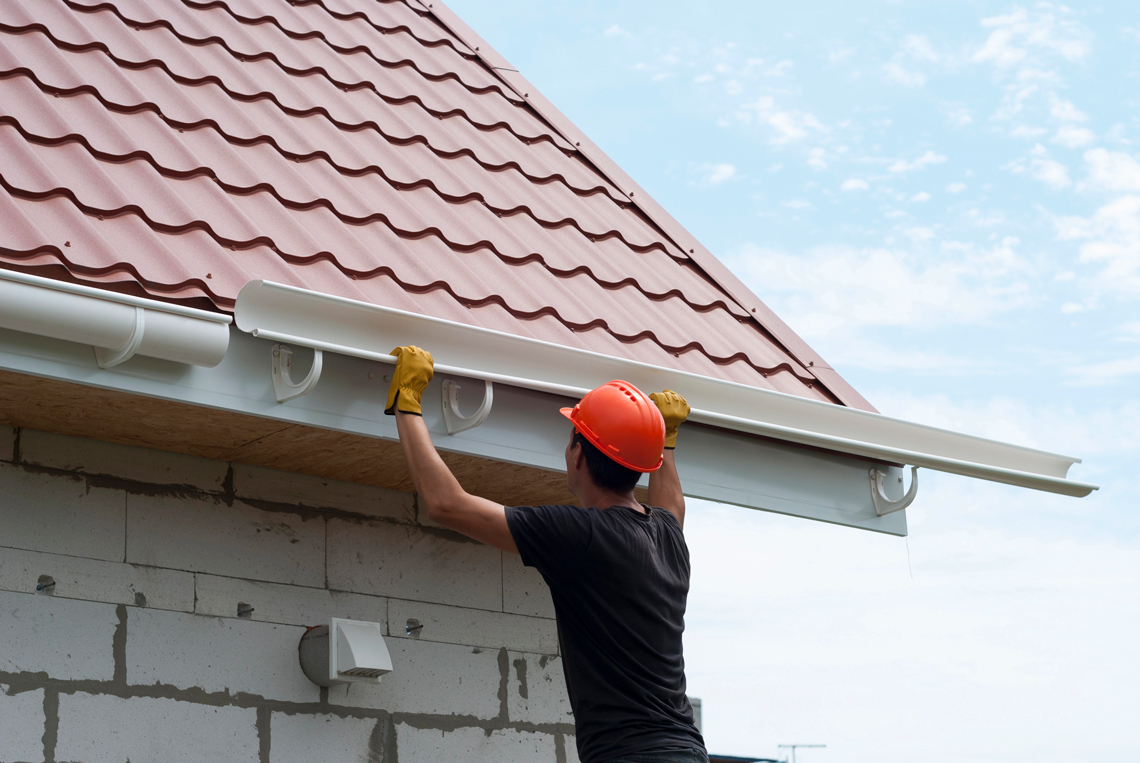
The first step in gutter installation is to establish where the gutters will go. Using a chalk line, mark a straight line along the roof’s edge. This will act as a guide to make sure the gutters are installed at the proper angle for water drainage. After marking, it’s time to install the gutter hangers along the roofline. These hangers will be the structural support for your gutters, so spacing them evenly and securing them tightly is key.
Once the hangers are in place, you can attach the gutters to them using screws or nails. Take the time to confirm that the gutters are aligned correctly and level. If the gutters aren’t level, water won’t flow toward the downspouts properly, which could lead to pooling or overflow.
If you’re using seamless gutters, remember that you’ll likely need to rent or purchase a special machine to form the gutters to your exact specifications on-site.
Installing Downspouts and Connecting to the Gutter System
Once the gutters are securely installed, the next task is adding the downspouts. These are critical for directing water away from the roof and foundation of your home. Downspouts should be placed at regular intervals along the roofline to manage the flow of water efficiently.
Make sure that each downspout is positioned to channel water away from the foundation, preventing possible flooding or erosion around your home. Once the downspouts are in position, attach them securely to the gutters using brackets or screws.
It’s important that these connections are tight and well-sealed so water can flow freely through the system without any leaks. Double-check that all downspouts are properly aligned to avoid any water pooling along the roofline.
Securing the Gutter System in Place
Once everything is installed, take a moment to double-check that all components are level and properly aligned. This step is important because even slight misalignments can cause water to flow in the wrong direction. It can lead to issues like sagging gutters or leaks.
Once you’re confident that everything is positioned correctly, secure the gutter system firmly to the roof and walls of your home using screws or nails. The gutters should be tightly fastened to make sure they remain in place, even during heavy rain or winds. When the gutters are not properly secured, they could pull away from the roof over time. This would result in a bigger problem that would require costly repairs.
Common Gutter Installation Mistakes to Avoid
DIYers can make mistakes during gutter installation. Here are a few common issues to watch out for:
- Incorrect Gutter Slope: If your gutters aren’t pitched correctly, water will pool and could cause leaks or clogs.
- Using the Wrong Materials: Always choose materials that suit your climate and budget. For example, vinyl gutters may not hold up well in areas with freezing temperatures.
- Poor Downspout Placement: If downspouts are placed incorrectly, water could be directed toward your foundation, causing damage.
- Inadequate Fastening: Failing to secure gutters properly could lead to sagging or gutters pulling away from the roof.
- Neglecting Regular Cleaning: Regular cleaning is necessary to keep your gutters free of debris and working efficiently.
Post-Installation Care and Maintenance
Once your gutters are installed, it’s important to maintain them properly to make sure they continue to protect your home.
Inspecting Your Gutters After Installation
Once the installation process is finished, take the time to thoroughly inspect your gutters. Make sure there are no leaks, especially at the seams or corners. Check the fasteners to confirm if they are secure and that the gutters are aligned properly.
This inspection will help you catch any minor issues early on and prevent costly repairs later. Water should flow smoothly through the system, and you should confirm that no clogs are blocking the downspouts. If you find any signs of misalignment or damage, it’s best to fix them as soon as possible, as these small problems can lead to bigger, more expensive issues over time.
Cleaning and Maintaining Gutters
Regular cleaning is key to keeping your gutters functioning properly. Over time, gutters can accumulate leaves, twigs, dirt, and other debris that can block the flow of water. To prevent this, clean your gutters at least twice a year—once in the fall and once in the spring. Fall cleaning is especially important because leaves tend to clog the gutters during this time of year.
If your home is located in an area with frequent storms or surrounded by trees, you may need to clean your gutters more often. Cleaning can be done manually with a scoop or with a high-pressure hose to flush out debris. When cleaning, it’s important to remove any large objects that could cause blockages, as even small amounts of debris can lead to clogs over time.
Preventing Clogs and Other Long-Term Issues
To minimize the need for frequent cleaning and reduce the risk of clogs, consider installing gutter guards. Gutter guards are designed to keep leaves, twigs, and other debris out of the gutters while still allowing water to flow freely through the system. These protective screens or mesh covers can save you time on cleaning and help prevent debris buildup.
Gutter guards help to keep the system clear and functioning properly by reducing the frequency of cleaning and blocking larger debris. Additionally, they can extend the life of your gutters, as fewer blockages and clogs mean less strain on the system overall.
Preparing Your Gutters for Seasonal Changes
It’s important to prepare your gutters for the changing seasons to ensure they continue to function at their best. In the fall, take the time to remove any leaves or twigs that may have accumulated in the gutters, especially before the first heavy rain.
If your gutters are clogged, water won’t drain properly, leading to overflow or even structural damage. In winter, ensure that no ice dams are forming in the gutters. Ice dams can occur when snow on the roof melts and refreezes in the gutters, blocking water flow.
To prevent this, make sure your gutters are clear and that the downspouts are not obstructed. Proper preparation in advance of the seasons can help avoid many common gutter problems. This guarantees they continue to protect your home year-round.
Why Choose Professional for Gutter Installation Instead of DIY Installation
While taking on a DIY gutter installation might sound like a rewarding and cost-saving project, it’s often better to rely on a professional. Gutters are necessary for protecting your home from water damage, and any mistakes during installation can result in costly issues like leaks, structural damage, or improper drainage. If your roofline is complicated, your roof is particularly steep, or you’re not confident working at heights, hiring a professional isn’t just a recommendation—it’s a necessity.
Professional installers come equipped with the right tools, skills, and experience to handle every aspect of the job. This guarantees your gutters are securely and accurately installed. They also know how to assess and address specific challenges, like difficult angles or unique roofing materials, that DIYers may not anticipate.
Beyond saving you time and effort, professionals work safely, eliminating the risks associated with climbing ladders and working on rooftops. Choosing a professional means peace of mind. You can know that your gutters will perform as they should to protect your home for years to come. It’s an investment in both safety and the long-term health of your property.
Gutter installation is a vital part of home maintenance. Properly installed gutters protect your home from water damage, safeguard your foundation, and preserve your landscaping.
If you’re ready to install gutters or need help with an existing system, contact Skyline Exteriors and Construction, PLLC today. We specialize in both residential and commercial gutter services, along with roofing, siding, and storm damage repairs. Our team can provide expert advice and high-quality installation. Protect your home and foundation by making gutter installation a priority today.