Quick Summary
TPO and EPDM roofing systems each offer benefits for Chicago commercial buildings, but the right choice depends on climate exposure, building needs, energy goals, and installation quality. TPO provides strong heat reflection and energy efficiency, while EPDM offers flexibility and cold-weather durability. Proper evaluation and maintenance help maximize long-term roof performance.
TPO roofing vs. EPDM is a common comparison for property owners planning upgrades or new builds in Chicago. Each system offers distinct advantages, yet performance depends heavily on installation quality, building use, and environmental exposure.
While most of Skyline’s work is residential roofing, we also serve commercial property owners throughout Chicago because the city’s commercial building stock presents unique roofing challenges. Selecting the right material requires a deeper look at how these systems perform under local conditions.
Chicago’s weather patterns create a demanding environment for any roofing system. Harsh winters, temperature swings, and summer heat place continuous stress on commercial structures.
A well-planned commercial roofing installation must account for these things from the start to avoid premature wear or structural concerns.
TPO Roofing Systems
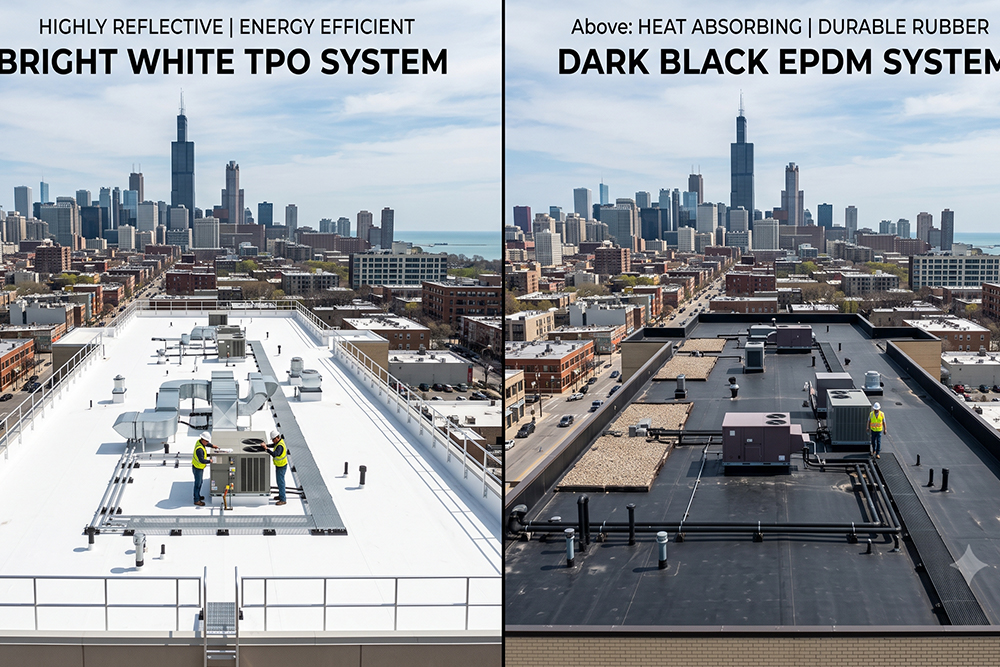
Thermoplastic Polyolefin, also known as TPO, is a single-ply membrane designed for energy efficiency and heat reflection. Its light-colored surface reflects sunlight, which helps reduce heat buildup across large commercial structures.
This characteristic appeals to building owners in search of lower cooling demands during warmer months.
TPO membranes are usually heat-welded at the seams, creating a tight bond that resists moisture intrusion. This seam strength helps prevent leaks, especially in areas with heavy rain or snow.
For buildings with a flat roof, watertight performance becomes a major consideration due to limited drainage slopes.
Another advantage of TPO lies in its resistance to ultraviolet exposure. Over time, roofs endure constant sunlight, which can degrade weaker materials. TPO’s composition helps maintain its surface integrity even after extended exposure.
This makes it a strong option for structures with large, open roof areas.
EPDM Roofing Systems
EPDM, sometimes referred to as rubber roofing, has been used across commercial properties for decades. It is known for flexibility and resilience, particularly in colder climates.
Chicago’s freezing winters make flexibility a valuable trait because roofing materials must adapt to expansion and contraction without cracking.
Unlike TPO, EPDM is typically black, which allows it to absorb heat. This can be beneficial during the winter months when buildings require additional warmth. The material’s ability to remain pliable in low temperatures helps reduce the risk of splitting or structural stress.
Seams in EPDM systems are usually adhered with specialized bonding agents rather than heat-welded. Although this method can be effective, long-term performance depends on proper application and regular inspection.
Any weakness in seam adhesion may lead to moisture entry if not handled correctly.
Climate Performance in Chicago Conditions
Chicago presents one of the most challenging climates for roofing systems. Snow loads, ice buildup, and seasonal temperature swings create repeated expansion and contraction cycles. Materials that cannot handle these changes may degrade faster.
TPO performs well in resisting heat and UV exposure during summer. Its reflective properties help control indoor temperatures, which can be beneficial for commercial buildings with large interior spaces.
However, performance during colder months depends on installation quality and membrane thickness.
EPDM stands out in winter conditions due to its elasticity. It remains stable even in extreme cold, reducing the likelihood of cracking. For buildings exposed to prolonged freezing temperatures, this flexibility can support long-term durability.
When evaluating TPO vs. EPDM flat roof options, climate response should remain a central consideration. Each material reacts differently to Chicago’s seasonal extremes, making professional evaluation imperative.
Energy Efficiency and Building Impact
Energy performance can also influence roofing decisions, especially for large commercial properties. TPO’s reflective surface helps reduce solar heat absorption, which can lower cooling demands during summer. This may result in noticeable operational savings over time.
EPDM, with its darker surface, absorbs heat rather than reflecting it. This can help retain warmth during winter but may increase cooling needs during warmer months. The balance between heating and cooling demands differs depending on building usage and insulation levels.
Installation Considerations and Structural Fit
Proper installation affects long-term performance more than the material itself. TPO systems require precise heat-welding techniques to create strong seams. Any inconsistency during installation can compromise the roof’s ability to resist water infiltration.
EPDM systems rely on adhesive bonding at seams and edges. While effective when installed correctly, this method requires attention to detail and proper surface preparation. Even small application errors can impact long-term performance.
The structure of the building also plays a part in determining the right system. Roof size, drainage design, and load capacity all influence material selection.
Buildings with large surface areas may benefit from TPO’s reflective properties, while structures exposed to severe winter conditions may lean toward EPDM.
A contractor experienced in roofing installation, repair, and replacement can evaluate everything and recommend a system that matches both structural requirements and performance goals.
Maintenance and Long-Term Value
Every commercial roof requires ongoing attention to maintain performance. TPO systems benefit from periodic inspections to confirm seam integrity and surface condition. Minor issues, when identified early, can be corrected before they lead to larger concerns.
EPDM systems also require routine evaluations, especially at seams and flashing areas. Over time, adhesive bonds may weaken, making inspections important for preventing leaks. Regular upkeep helps extend the lifespan of the roof and protects the building’s interior.
Comparing Cost Factors Without Cutting Corners
Initial cost often becomes a deciding consideration for commercial property owners. TPO systems may involve a higher upfront investment due to installation complexity. However, their reflective properties can contribute to energy savings over time.
EPDM systems typically come with a lower initial cost, making them attractive for budget-conscious projects. Yet long-term considerations such as maintenance and energy use should be evaluated carefully before making a decision.
Coordinating Roofing with Gutters and Drainage
Flat and low-slope commercial roofing systems rely on effective drainage to perform as intended. Properly sized gutters, downspouts, and drainage components help direct water away from the roof, reducing the risk of standing water and moisture-related damage over time.
When replacing a commercial roof, it is also important to evaluate the condition of the building’s drainage system. Coordinating roofing work with gutter improvements, when necessary, helps support long-term roof performance and protects the overall structure.
Choosing the Best Fit for Your Property
There is no single answer that works for every building. The decision between TPO and EPDM depends on structure, usage, and environmental exposure. Chicago’s climate adds another layer of complexity, making professional input valuable.
Property owners should evaluate their building’s needs before committing to a system. Things like roof size, insulation, and long-term plans all influence the outcome.
Selecting the best flat roof material in Chicago requires more than comparing materials; it requires a full assessment of the building.
Working with an experienced contractor helps simplify the decision. A thorough inspection can reveal underlying concerns and guide the selection process toward a reliable solution.
Get Commercial Roofing Support from Skyline Exteriors and Construction, PLLC
We work with commercial property owners across Chicago who need dependable roofing systems that stand up to demanding conditions. Our team approaches every project with attention to detail, focusing on performance, durability, and long-term value.
We take the time to evaluate your building before recommending a solution. We handle every aspect of your project, from system selection to final installation.
Our experience in commercial roofing allows us to deliver results that match the needs of your property. Contact our team today to discuss your commercial roofing needs and find the right TPO or EPDM solution for your building.