
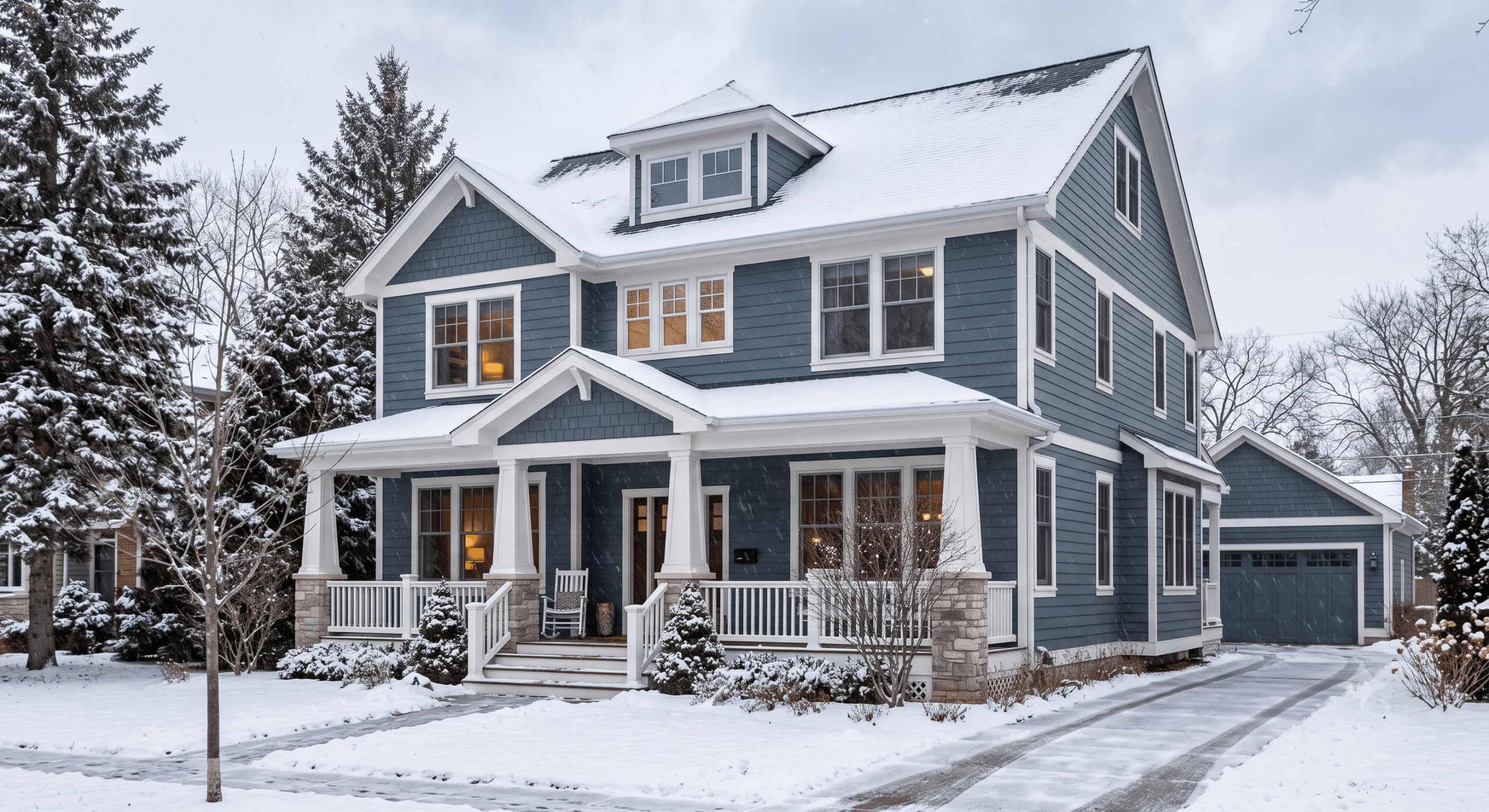
Quick SummaryJames Hardie siding in Chicago, also known as fiber cement siding, offers strong fire resistance, moisture protection, and long-term durability suited to the region’s harsh freeze-thaw cycles. It runs roughly double the cost of vinyl, with the final price shaped by product line, home complexity, and the full tear-off every proper installation requires. Homeowners planning to stay long-term or facing an aging or storm-damaged siding system typically see the strongest return on investment. Working with a preferred contractor protects manufacturer warranty coverage and ensures the material performs as designed for decades, making the decision less about trend and more about long-term value. |
Every siding material comes with a sales pitch, but not every material holds up to Chicago’s actual weather. Long winters, sudden temperature swings, and a fair share of hailstorms make this one of the tougher climates in the country for exterior materials to survive gracefully.
James Hardie siding in Chicago has become one of the most requested upgrades among homeowners specifically because it is built to handle exactly these conditions, but “popular” and “worth it for your home” are not always the same question.
James Hardie siding is fiber cement siding, and the two terms are often used interchangeably in this industry. This breakdown looks honestly at what it actually offers, what it costs, and where it makes sense compared to other materials, so you can decide with real information rather than marketing language.
We are a James Hardie preferred contractor, which means our installation teams have specific manufacturer training on this exact product, and it is a distinction worth understanding before you hire anyone for the job.
What Makes James Hardie Different
James Hardie is a fiber cement siding product, made from a mix of cement, sand, and cellulose fibers. That composition gives it a set of properties that vinyl and even some wood products struggle to match:
- Fire resistance: Fiber cement does not burn the way wood or some composite materials can, which matters for both safety and, in some cases, insurance premiums.
- Moisture resistance: Properly installed, it resists warping, swelling, and rot far better than wood siding, which is a significant advantage in a climate with heavy snow and spring thaw cycles.
- Pest resistance: Unlike wood, it does not attract termites or carpenter ants, removing an entire category of long-term maintenance concern.
- Durability against temperature swings: Chicago’s freeze-thaw cycle is brutal on materials that expand and contract unevenly. Fiber cement holds its shape and finish far more consistently over time than many alternatives.
- Paint retention: Factory-applied color finishes on James Hardie products are engineered to resist fading, chipping, and cracking longer than standard field-painted wood siding.
James Hardie Siding Cost: What to Actually Expect
James Hardie siding cost runs roughly double that of vinyl siding, which is the single biggest question homeowners have once they start comparing materials. The exact number depends on several factors:
Product Line Selected
James Hardie offers multiple product lines, including lap siding, shingle-style panels, and board-and-batten profiles. Each has a different price point based on manufacturing complexity and finish detail.
Home Size and Architectural Complexity
As with any siding project, more corners, dormers, and trim details increase labor time and therefore total cost.
Full Tear-Off
A proper installation means removing the existing siding entirely so the crew can inspect and, if needed, repair the sheathing underneath before the new material goes on. This is a standard part of doing the job right, not an optional add-on.
Preferred Contractor Installation
Not every contractor installing James Hardie products carries manufacturer-level certification. We are a James Hardie preferred contractor, which reflects specific training on the product’s requirements. That training reduces the risk of installation errors that can void warranties or cause early failures, and it is worth asking any contractor you are considering whether they hold that same status.
Is James Hardie Worth It for Your Home?
The honest answer depends on how long you plan to stay in the home and what you value most.
It tends to make sense when:
- You plan to stay in the home long-term and want to minimize future maintenance
- Your current siding is aging, faded, or was damaged in a recent hailstorm
- You want a finish that holds its color without frequent repainting
- Resale value and curb appeal matter for your neighborhood’s home values
It may be less of a priority when:
- You are planning to sell within the next year or two and want to minimize upfront spend
- Your existing siding is in good condition and you are shopping proactively rather than out of necessity
- Budget constraints make vinyl a more practical near-term choice, with fiber cement as a future upgrade
There is no universally correct answer here. A straightforward conversation with an experienced siding team about your timeline and priorities usually clarifies the decision quickly.
What a Proper Installation Looks Like
Whether you are installing James Hardie for the first time or fully replacing an aging system, the process benefits from the same fundamentals: a thorough inspection of the sheathing underneath, proper house wrap or moisture barrier installation, and precise flashing around windows and doors. Skipping any of these steps undermines even the best siding material sitting on top.
Our crews handle full siding replacement projects rather than partial patch jobs, which matters even more with fiber cement, since manufacturer warranties are strongest when the entire installation follows James Hardie’s specific guidelines from start to finish.
James Hardie vs. Vinyl vs. Wood: A Practical Comparison
Seeing the three most common siding materials side by side often makes the decision clearer than reading specs in isolation.
Vinyl is the lowest upfront cost and requires almost no maintenance beyond occasional washing, but it can fade over time, crack in extreme cold, and generally has a shorter practical lifespan than fiber cement.
Wood offers a natural look that some homeowners specifically want, particularly on historic or craftsman-style homes, but it demands regular repainting or staining and is far more vulnerable to moisture, rot, and pests in a climate like Chicago’s.
James Hardie fiber cement sits between the two in a different way: a higher upfront cost than vinyl, but with far less long-term maintenance and a much longer practical lifespan than either alternative, along with the fire and pest resistance that neither vinyl nor wood can match.
For homeowners weighing these three, the decision usually comes down to time horizon. Short-term ownership favors vinyl’s lower upfront cost. Long-term ownership tends to favor fiber cement, since the reduced maintenance and extended lifespan offset the higher initial investment over ten to twenty years.
Considering Decks While You Are at It
Homeowners planning a full exterior refresh often look at decking at the same time as siding, especially if both are original to the home. We are also a preferred Trex contractor, and composite decking pairs well with a fiber cement exterior in terms of long-term durability and low maintenance, since neither material requires the yearly upkeep that wood demands.
Why Homeowners Choose Us for James Hardie Projects
As a James Hardie preferred contractor, we bring manufacturer-backed training to every installation, alongside our BBB accreditation, active Illinois contractor license, and a 4.9-star reputation built on close to 250 Google reviews.
Beyond siding, we support residential siding installation projects across the region, and we have completed James Hardie installations for homeowners in Riverside and Elmwood Park, helping each decide between fiber cement and other materials based on their specific home and budget.
Schedule a free consultation with our team and get a straightforward answer based on your specific property.